DigestFlow Official Website › Blog › Caffeine In A Digestive Capsule
Why There Is Caffeine In A Digestive Capsule, And How Much
The largest row on the DigestFlow panel is caffeine anhydrous at 138 mg, and the seller’s front page never mentions it. There is a real reason it is there, a real limit to that reason, and a figure worth adding up first.
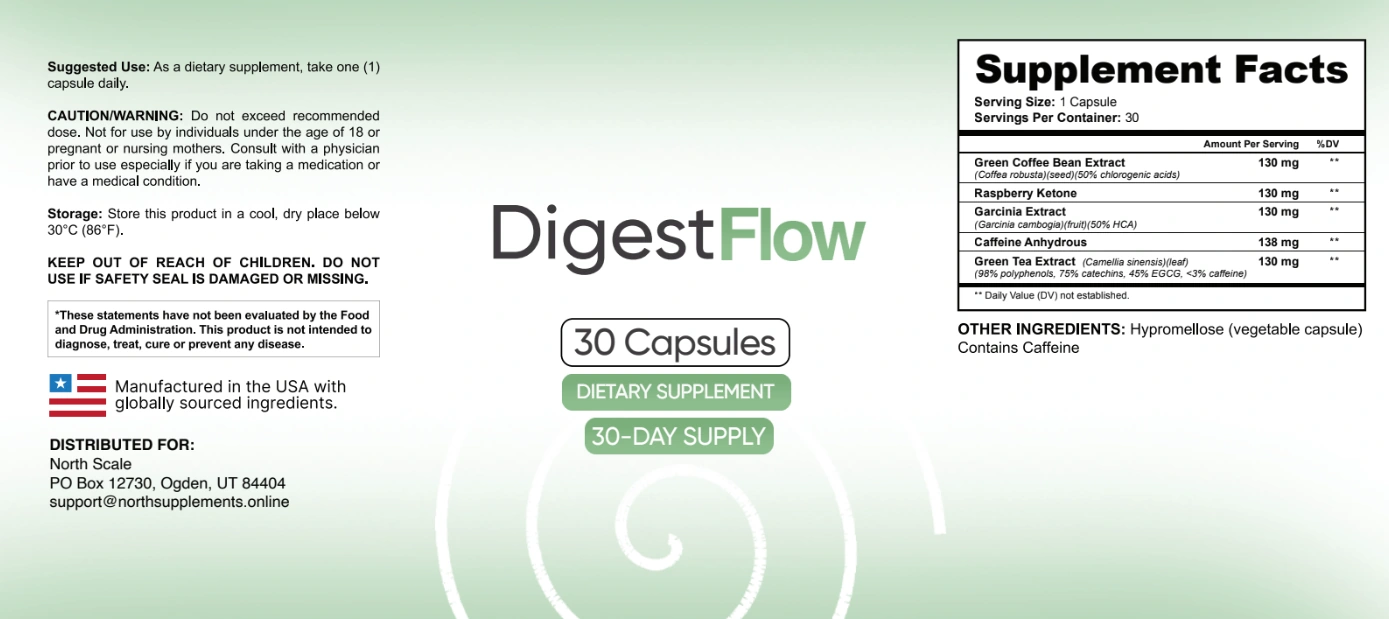
- Each capsule carries 138 mg of added caffeine, plus a trace from the green tea row.
- That is roughly one strong mug of brewed coffee, every day, at whatever hour you take it.
- The best evidence for it is colonic manometry, where caffeinated coffee produced motor activity comparable to a meal.
- The same study found decaffeinated coffee produced most of that effect, and a randomised trial of pure caffeine found none.
- The reference figures are 400 mg a day and 200 mg in a single dose. One capsule is inside both.
Why a stimulant is on a digestive panel
The first reaction most people have to caffeine on a digestive supplement is that it does not belong there, and that reaction deserves a straight answer.
Caffeine has a directly measured relationship with the large bowel, and it is one of very few compounds in this category that can say so. Most digestive ingredients reach the market on a mechanism: they plausibly do something, and the argument stops there. Caffeine has been put into people with pressure sensors in their colon and the result written down.
So the row is not a marketing decision dressed as a formulation one. It is the row with the strongest claim to being about the organ this product is sold for, which is an odd thing to be true and is true anyway.
The study that makes the case
The reference point is a piece of work from an Iowa gastroenterology group. Twelve healthy adults swallowed a six-sensor solid-state probe reaching the mid transverse colon and, over the following ten hours, received four stimuli in random order: black coffee carrying 150 mg of caffeine, decaffeinated coffee, water, and a 1,000 kcal meal.
Caffeinated coffee produced a greater area under the pressure curve and more propagated contractions than water: about the same magnitude as the meal, 60 per cent stronger than water and 23 per cent stronger than decaffeinated coffee.
That is the most concrete evidence anything on this panel has. A meal is the standard physiological stimulus for the colon, and a drink producing a comparable response is a finding rather than an inference.
Where in the colon it acted
One detail from that paper is worth carrying. The effect was greater in the transverse and descending colon than in the rectosigmoid, for all three stimuli including the meal. That is consistent with general stimulation of colonic motor activity rather than something at the very end of the tract.
The finding in that study that undercuts it
The same paper carries a result that anybody selling a caffeine row would prefer to leave out, and leaving it out would be the dishonest move.
Decaffeinated coffee also produced more colonic activity than water. Its effect was not significantly different from water, and it was also not significantly different from caffeinated coffee. The gap between caffeinated and decaffeinated was 23 per cent.
Read that carefully and the implication is uncomfortable for a capsule. If decaffeinated coffee carries most of the effect, then most of the effect is not caffeine. Something else in coffee, and chlorogenic acids are among the candidates, is doing a large share of the work.
A capsule delivers caffeine without the volume, the temperature, the acidity or the rest of coffee’s chemistry. If the effect measured in that study came partly from those, a capsule does not inherit that part. This is the single biggest gap between the evidence and the product, and it is why the mechanism page describes the caffeine route as the best-evidenced one rather than as a proven one.
What happened when somebody tested caffeine alone
There is one directly relevant test of caffeine on its own, and it did not go the way a caffeine row would want.
The CaCo trial randomised sixty patients after elective laparoscopic colectomy to 100 mg of caffeine, 200 mg of caffeine or a corn-starch placebo, three times a day, double-blinded. The primary endpoint was time to first bowel movement.
The results were flat. Mean times were 67.9 hours on 200 mg, 68.2 hours on 100 mg and 67.3 hours on placebo. The per-protocol analysis and a direct measurement of colonic transit time confirmed no measurable difference.
Two qualifications belong with that. It was a post-surgical population, and it measured a single hard endpoint rather than symptoms. But it is the cleanest available test of caffeine without coffee around it, and it was negative.
And the wider literature is split
A 2025 systematic review gathered eight studies of caffeine and constipation in adults, across coffee, tea, energy drinks, cocoa and kombucha. Four concluded caffeine may help; four showed no improvement or an increase. No meta-analysis was possible, because the studies were too different to pool. A category where half the evidence points each way is one where an individual answer matters more than an average one.
| What was tested | What was found | What it does and does not settle |
|---|---|---|
| Caffeinated coffee against water and a meal, colonic manometry, 12 adults | Motor activity about the magnitude of a 1,000 kcal meal, 60 per cent above water and 23 per cent above decaf | Settles that caffeinated coffee stimulates the colon, not that caffeine alone does |
| Decaffeinated coffee in the same study | Most of the same effect, not significantly different from water or from caffeinated coffee | Something in coffee other than caffeine carries part of the effect |
| Pure caffeine at 100 and 200 mg three times daily after colectomy, randomised and placebo-controlled | No reduction in time to first bowel movement; transit time confirmed no difference | The most direct test of caffeine alone, in a surgical population, and it was negative |
| Eight studies of caffeine and constipation, systematic review | Four concluded caffeine may help, four found no improvement or an increase | The literature is genuinely split and no meta-analysis was possible |
Four pieces of evidence, in descending order of how well they support a caffeine row. Only the first is positive, and it tested a drink.
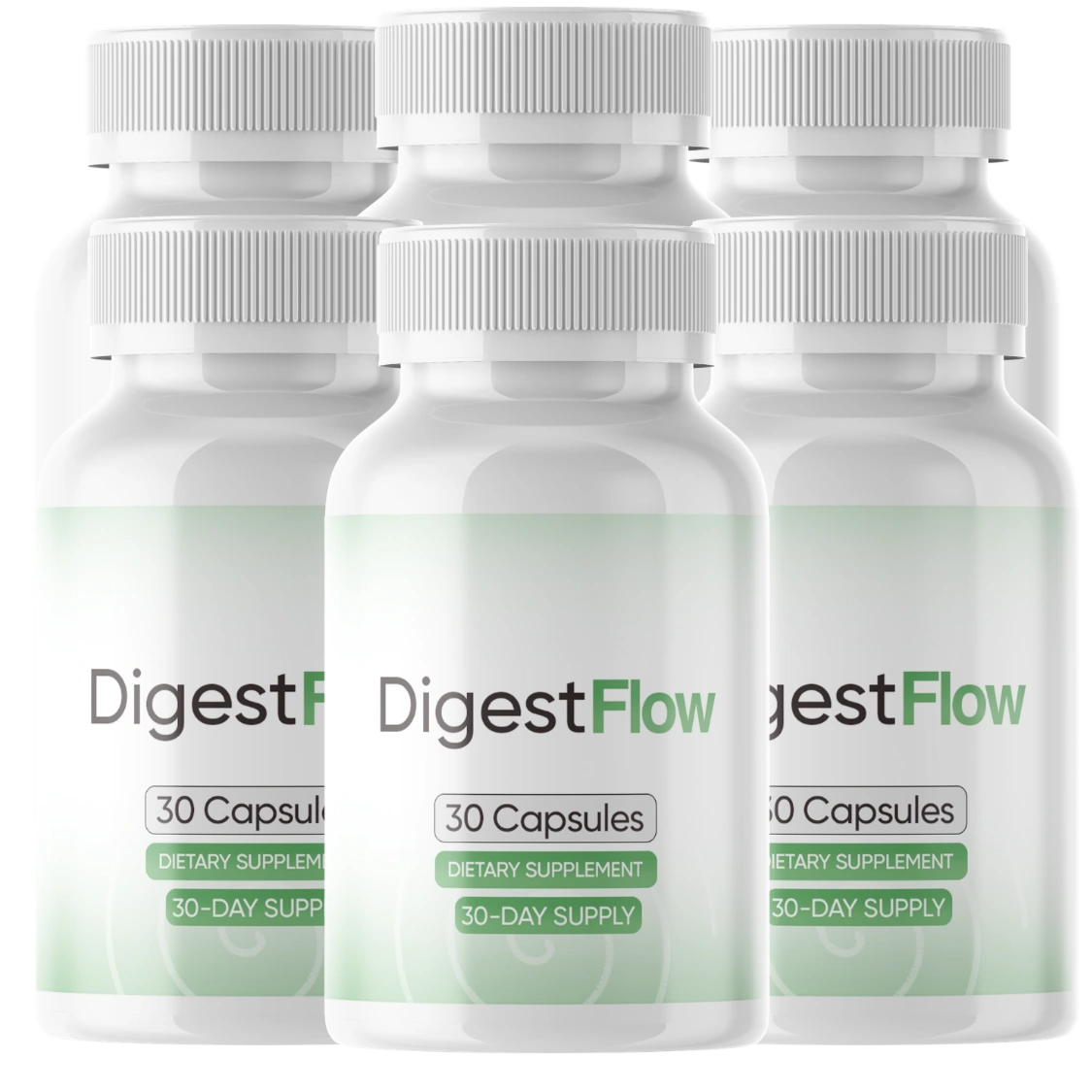
DigestFlow prints its caffeine figure on the panel
138 mg of caffeine anhydrous, alongside four other actives with every milligram published. One capsule a day, 30 to a bottle.
Two bottles $158 · six bottles $294 · 60 days from the date of purchase
Order DigestFlow On The Official WebsiteOne capsule a day · 30 per bottle · lot DIG-26/DI-5237
How much 138 mg actually is
Milligram figures are hard to weigh in the abstract, so here it is against things people drink.
| Source | Typical caffeine | How it compares with one capsule |
|---|---|---|
| One DigestFlow capsule | 138 mg, plus a trace from the green tea row | The reference point for this table |
| A 12 oz mug of brewed coffee | About 95 to 165 mg | Roughly the same |
| A mug of black tea | About 40 to 70 mg | Around half |
| A 12 oz cola | About 30 to 40 mg | Around a quarter |
| A cup of decaffeinated coffee | About 2 to 5 mg | A rounding error |
Ranges for common sources rather than named products. Brewed coffee varies enormously with the bean and the method.
The capsule sits in the same band as a mug of coffee or an energy drink, above tea and well above cola. Nothing about that is alarming for an adult who already drinks coffee.
What is different is the consistency. A brewed mug varies by a factor of two or more, so somebody who drinks one a day takes a different amount most days. A capsule is the same figure every time, which helps anybody trying to work out whether caffeine is the problem.
The reference figures, and who is outside them
The FDA cites 400 mg a day for healthy adults as an amount not generally associated with negative effects, and estimates toxic effects such as seizures with rapid consumption of around 1,200 mg. EFSA reached 400 mg independently in 2015 and added a figure the FDA page does not give: single doses up to 200 mg raise no safety concern for adults.
One capsule at 138 mg is below the single-dose figure and around a third of the daily one. The arithmetic that matters is never the capsule alone; it is the capsule plus everything else you drink.
- Anyone avoiding caffeine on medical advice. There is no caffeine-free version.
- Anyone pregnant or nursing, whom the label excludes; EFSA puts the figure at 200 mg a day in pregnancy.
- Anyone under 18, whom the label also excludes.
- Anyone with an arrhythmia or uncontrolled high blood pressure.
- Anyone on a medicine that slows caffeine clearance, which makes the same figure a larger effective dose.
Caffeine and reflux, with the numbers
The one digestive complaint caffeine plausibly makes worse is reflux, and the recent evidence is more moderate than the usual advice. A 2026 meta-analysis pooled forty studies covering 122,074 people. Reflux disease was more common among coffee drinkers than non-drinkers, 34.9 per cent against 30.7, with an odds ratio of 1.18 and no significant association with Barrett’s oesophagus.
That is a modest association, and it describes coffee rather than a capsule taken with water. If caffeine reliably gives you heartburn, your own experience beats the pooled figure and this is not the product for you.
The hour, which matters more than the amount
Caffeine has a half-life of roughly four to six hours in most adults and longer in some, so a capsule taken at four in the afternoon is still partly present at ten at night.
That matters more on a digestive product than on any other kind. Poor sleep is associated with worse gut symptoms, so a capsule that costs somebody an hour of sleep can move the very thing they are measuring in the wrong direction while appearing to do nothing.
The rule is short: take it with breakfast, and count it with your coffee for the first week. The usage page sets out the other decisions the label leaves open.
- Take it in the morning, attached to an existing habit.
- Take it with food, which also suits the green tea row on this panel.
- Count your total caffeine for seven days and compare it with 400 mg.
- If you sleep badly in the first three days, that is the answer and the window is open.
The part this desk finds hardest to defend
Everything above argues that the caffeine row has a reason to be on this panel. Here is the part with no defence.
The seller’s front page carries no Supplement Facts panel. It names what the product supports and leaves the composition to the bottle, so a buyer has no way of discovering the largest ingredient until it arrives.
For most adults that is a surprise rather than a problem. For somebody avoiding caffeine, pregnant, sleeping badly or on a medicine that interacts with it, discovering 138 mg of stimulant on day one is not a small thing. It is why this website prints the figure in the first paragraph of its home page, in the panel, on five other pages and in the footer disclaimer of every page.
Stop here. There is no caffeine-free version, and nothing else on the panel is a reason to take a stimulant you have already ruled out. Who it is for has the full list of poor fits.
References
- Rao SS, Welcher K, Zimmerman B, Stumbo P. Is coffee a colonic stimulant? Eur J Gastroenterol Hepatol. 1998;10(2):113-8. PMID 9581985. https://pubmed.ncbi.nlm.nih.gov/9581985/
- Abbassi F, Muller SA, Steffen T, et al. Caffeine for intestinal transit after laparoscopic colectomy: randomized clinical trial (CaCo trial). Br J Surg. 2022;109(12):1216-1223. PMID 35909263. https://pubmed.ncbi.nlm.nih.gov/35909263/
- Latthe A, Tan A, Latthe P. The Effectiveness of Caffeine in Reducing Constipation in Adults: A Systematic Review. Int Urogynecol J. 2025;36(2):253-264. PMID 39666017. https://pubmed.ncbi.nlm.nih.gov/39666017/
- Muftah M, McCarty TR, Hartnett D, et al. Association of Coffee Intake With Risk of Gastroesophageal Reflux Disease and Complications: A Systematic Review and Meta-Analysis. Clin Transl Gastroenterol. 2026;17(4):e00996. PMID 41677121. https://pubmed.ncbi.nlm.nih.gov/41677121/
- Spilling the Beans: How Much Caffeine is Too Much? U.S. Food and Drug Administration, consumer update. https://www.fda.gov/consumers/consumer-updates/spilling-beans-how-much-caffeine-too-much
- EFSA Panel on Dietetic Products, Nutrition and Allergies. Scientific Opinion on the safety of caffeine. EFSA Journal. 2015;13(5):4102. https://www.efsa.europa.eu/en/efsajournal/pub/4102