DigestFlow Official Website › Digestive Supplement Guide
Digestive Supplement GuideThe Digestive Supplement Guide
The category contains five distinct approaches and they are not interchangeable.
Bulk-forming fibres, probiotics, digestive enzymes, botanical stimulants and polyphenols each act differently, have different evidence behind them and suit different problems. This guide sets out what each one does, what it is good for, and the three things that work without buying anything at all.
Written to be useful whether or not you buy a supplement, and it names the cheapest options first because they are the ones that most often work.
Start with the three things that cost nothing
Three habits and one appointment, none of which anybody profits from recommending.
Fibre from food, before fibre from a tub
Most adults eat well under the amount of fibre usually recommended, and the gap is closed more reliably by beans, oats, fruit and vegetables than by a scoop. It is also slower, less pleasant and not sold by anybody, which is why it appears at the top of an honest guide and the bottom of most others.
Fluid, which fibre depends on
Bulk-forming fibre works by holding water. Adding fibre without adding fluid is the single commonest way somebody makes a digestive complaint worse while trying to fix it, and it is free to get right.
A regular routine, including sleep
The gut has its own daily rhythm and it responds to meal timing and to sleep. Irregular hours are a common and under-considered contributor, and they cost nothing to address except effort. The NIDDK’s page on constipation covers the same ground in plain language.
A pattern that has changed and stayed changed is worth one conversation. The NIDDK on irritable bowel syndrome and MedlinePlus both set out which gut patterns are ordinary and which warrant being seen. A year of supplements instead of one appointment is the expensive route to the same answer.
The five approaches, and what each one actually does
Five groups, with what each does and how strong its record is.
| Approach | What it is | What it does | Evidence |
|---|---|---|---|
| Bulk-forming fibre | Psyllium, methylcellulose, inulin, partially hydrolysed guar gum | Holds water and adds volume, changing stool form directly | The largest and oldest evidence base in the category, and the cheapest |
| Probiotics | Live bacterial strains with a CFU count | Adds organisms, which may or may not establish | Strain-specific and highly variable. A CFU count is a quantity, not a finding |
| Digestive enzymes | Amylase, lipase, protease, lactase | Breaks down specific food components in the gut | Strong for named deficiencies, such as lactase for lactose intolerance. Thin otherwise |
| Botanical stimulants | Senna, cascara, aloe latex | Acts on the bowel wall. Fast and not a daily habit | Effective and short-term by design. Not what most people want |
| Polyphenols and plant extracts | Green tea catechins, chlorogenic acids, curcumin and others | Largely escapes absorption, reaches the colon, and is metabolised by gut bacteria | Mechanistically well described, with human outcome trials thin on the ground |
Five approaches. They are not in competition in the way marketing suggests: they act on different things and suit different problems.
DigestFlow sits in the fifth group, with one row from the fourth. Its two polyphenol rows work through the colon and its caffeine row is a mild stimulant, which is a combination worth understanding before comparing it with a fibre.
The practical question a buyer should ask is not which group is best but which group matches the complaint. Stool that is too hard is a fibre and fluid problem. Symptoms that follow a specific food may be an enzyme question. A general sense of things not settling is the vaguest complaint and the one the polyphenol shelf is aimed at.
What the polyphenol approach rests on
Why poor absorption is the point, and where the evidence stops.
Polyphenols are the fastest-growing corner of this category and the one least well explained on the labels that sell them, so it is worth setting out properly.
The idea turns on poor absorption. A compound absorbed in the small intestine has left the digestive tract before it reaches the part of it with a microbial population. A compound that is not absorbed arrives where the bacteria are.
A 2026 review of chlorogenic acid describes that sequence: a large proportion arrives in the colon intact, is degraded into caffeic and quinic acids, and shifts the balance of what grows, with short-chain fatty acids among the metabolites produced. A companion review of coffee’s bioactives places microbiota modulation among the effects its polyphenols are credited with.
Green tea catechins behave the same way and have a human trial rather than a mechanism story. A randomised, double-blinded study gave thirty-three people matcha or placebo for two weeks and sequenced their stool; beta-diversity shifted in the tea group and not the placebo group, with thirty genera moving against three.
It is a change in the gut environment, measured by sequencing. It is not a measured improvement in anybody’s symptoms, and no polyphenol product in this category has that. A label implying otherwise is going beyond what the published work supports.
The four things this category most often gets wrong
Four errors, three of them the label’s fault and one the buyer’s.
“A CFU count presented as evidence”
Fifty billion organisms of a strain with no trial behind it is fifty billion of nothing in particular. Probiotic evidence is strain-specific, and a count tells you about quantity rather than about effect.
“Proprietary blends”
A combined total for eight ingredients means no individual amount can be checked against anything. It is a choice not to be falsifiable, and it is the single most informative thing on a label that carries one.
“A stimulant not mentioned on the front”
Caffeine, senna and aloe latex all have to appear on a panel and none of them has to appear on a front page. A product sold for comfort that contains a stimulant is a different proposition from one that does not, and that is a fact worth going looking for.
“Timelines borrowed from the wrong approach”
A fibre works in days and a polyphenol works over weeks, if it works at all. Somebody applying a fibre expectation to a polyphenol capsule abandons it in week one and concludes the wrong thing.
How to run a fair trial of anything in this category
Six habits, useful whichever approach you settle on.
- Write a baseline week before you start. One symptom, one word or a score, every evening.
- Change one thing at a time. A new diet and a new capsule in the same week produce an unattributable result.
- Match the trial length to the approach: days for a fibre, weeks for a polyphenol or a probiotic.
- Keep the hour and the food conditions constant, which matters most on anything containing a stimulant.
- Read the notes at the end rather than trusting the impression. A run of ordinary days is easy to forget and a bad one is not.
- Check what the refund window is and when it starts, before you buy rather than at the end.
None of that is specific to any product and all of it is the difference between an answer and an impression. NCCIH’s guidance on using supplements sensibly covers the same territory from the regulatory side.
Sources for this guide
Eight, all of them public and none of them behind a paywall.
- Kong H, Han J, Meng X, Wang X, Zhang XA. Chlorogenic Acid-Gut Microbiota Interactions: New Insights for Alleviating Chronic Diseases and Health Disorders. Nutr Rev. 2026;84(10):2147-2173. PMID 41259210. https://pubmed.ncbi.nlm.nih.gov/41259210/
- Machado F, Coimbra MA, del Castillo MD, Coreta-Gomes F. Mechanisms of action of coffee bioactive compounds - a key to unveil the coffee paradox. Crit Rev Food Sci Nutr. 2024;64(28):10164-10186. PMID 37338423. https://pubmed.ncbi.nlm.nih.gov/37338423/
- Morishima S, Kawada Y, Fukushima Y, Takagi T, Naito Y, Inoue R. A randomized, double-blinded study evaluating effect of matcha green tea on human fecal microbiota. J Clin Biochem Nutr. 2023;72(2):165-170. PMID 36936880. https://pubmed.ncbi.nlm.nih.gov/36936880/
- Constipation. National Institute of Diabetes and Digestive and Kidney Diseases, National Institutes of Health. https://www.niddk.nih.gov/health-information/digestive-diseases/constipation
- Irritable Bowel Syndrome (IBS). National Institute of Diabetes and Digestive and Kidney Diseases, National Institutes of Health. https://www.niddk.nih.gov/health-information/digestive-diseases/irritable-bowel-syndrome
- Constipation. MedlinePlus, U.S. National Library of Medicine. https://medlineplus.gov/constipation.html
- Using Dietary Supplements Wisely. National Center for Complementary and Integrative Health, National Institutes of Health. https://www.nccih.nih.gov/health/using-dietary-supplements-wisely
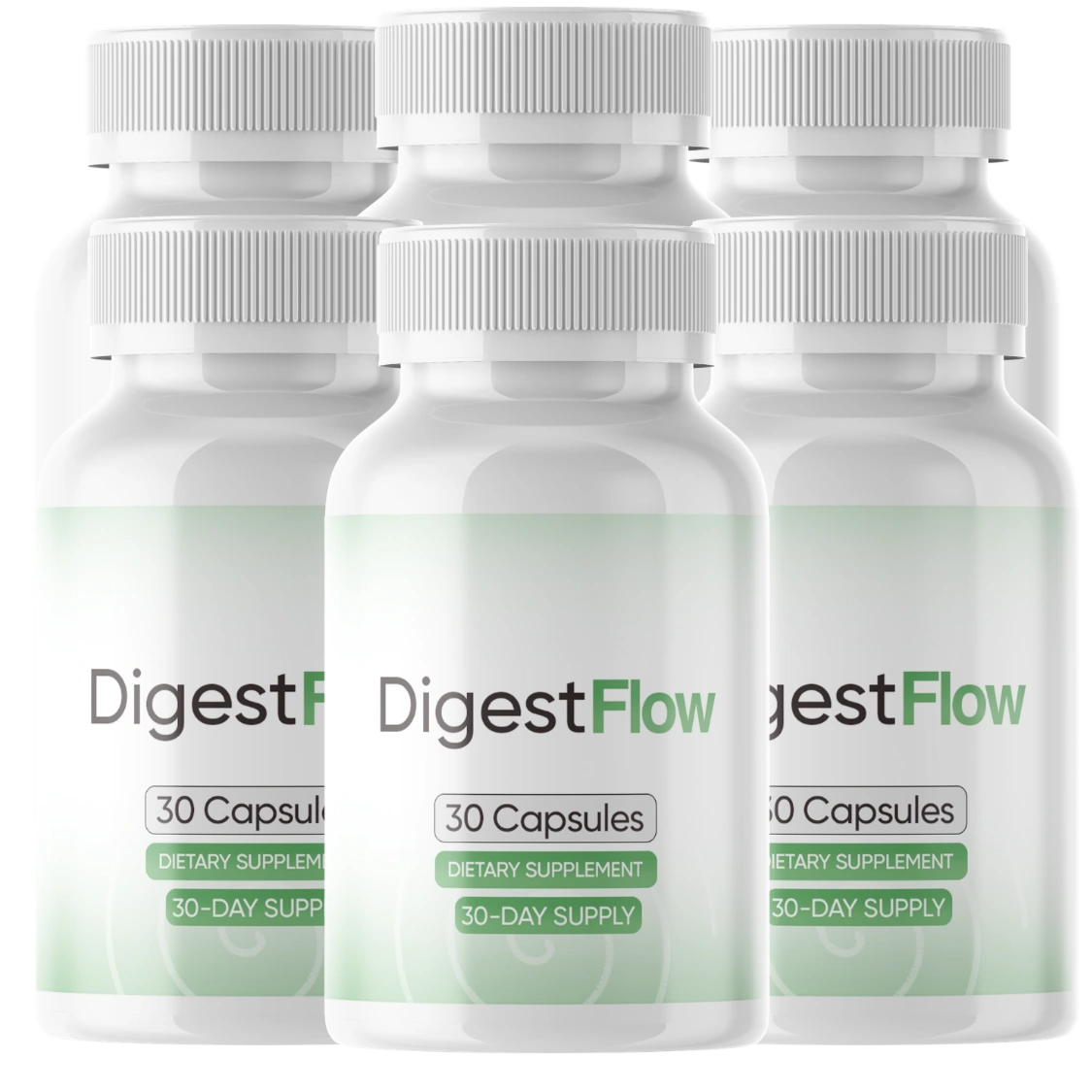
If a polyphenol capsule is what you want, DigestFlow prints its amounts
Five actives, every milligram published, and a panel you can hold against the bottle.
Two bottles $158 · six bottles $294 · 60 days from the date of purchase
Order DigestFlow On The Official WebsiteOne capsule a day · 30 per bottle · lot DIG-26/DI-5237