DigestFlow Official Website › Side Effects
Side EffectsDigestFlow Side Effects and Who Should Avoid It
The main DigestFlow side effect is caffeine, 138 mg in each daily capsule.
People sensitive to caffeine may notice sleeplessness, jitters or a faster heartbeat. Nothing on the panel is a laxative. If you take medication, ask your doctor first.
See who DigestFlow suits before you order.
What a caffeinated capsule does, the two ingredients with a real safety file, and who should leave this product alone.
The DigestFlow caffeine question, with the numbers
The amount, the reference figures, and the five things people actually report.
Every capsule carries 138 mg of added caffeine anhydrous, plus a small amount inside the green tea extract, which is standardised to under 3 per cent caffeine. Call the total roughly 142 mg, which is about a strong mug of brewed coffee.
The FDA cites 400 mg a day as an amount not generally associated with negative effects in healthy adults, and estimates that toxic effects such as seizures can be seen with rapid consumption of around 1,200 mg. EFSA reached 400 mg a day independently and added that single doses up to 200 mg raise no safety concern for adults.
One capsule is comfortably inside both figures. The arithmetic that matters is not the capsule on its own but the capsule plus everything else, which is why the usage page asks for a week of counting before you decide.
| Effect | Who tends to get it | What usually fixes it |
|---|---|---|
| Trouble falling asleep | Anyone taking it after about midday, and slow metabolisers at any hour | Move it to breakfast. This is by far the commonest and by far the easiest. |
| Jitteriness or a racing feeling | People already near their own limit before the capsule | Cut a coffee on the days you take it, or stop if it persists |
| Faster heartbeat | Caffeine-sensitive people, and anyone taking a medicine that slows caffeine clearance | A conversation with whoever prescribes it, before the next capsule |
| Headache on stopping | Anyone who has taken it daily for weeks and stops abruptly | Ordinary caffeine withdrawal. It passes in a few days |
| Heartburn | People whose reflux is already triggered by caffeine | Own experience beats any statistic here. If coffee does it, this will |
These are caffeine effects rather than effects peculiar to this product. The systematic review behind the 400 mg figure notes wide variation between individuals in sensitivity and clearance.
The two DigestFlow rows with a documented liver file
Both files in full, with the amounts involved and the amounts on this label.
Garcinia cambogia
This is the panel’s one serious safety literature and it deserves stating in full rather than softening. A 2025 review of the adverse-event databases identified more than 200 reports of liver injury associated with Garcinia products and 34 published case reports, of which one involved a death and nine involved liver transplants. Seventeen were scored as possible to highly probable on a formal causality assessment, and in one case causality was confirmed by rechallenge.
LiverTox records the same picture and NCCIH states plainly that it may be unsafe to consume Garcinia products, including multi-ingredient ones, while describing severe cases as uncommon.
Two things keep that in proportion without dismissing it. Almost all of that literature involves gram-scale daily intakes, where this row delivers about 65 mg of hydroxycitric acid, and most of it involves multi-ingredient products where attribution is difficult. A national survey found Garcinia among the six botanicals most often reported in supplement hepatotoxicity.
Green tea extract
The United States Pharmacopeia’s systematic review of green tea extract hepatotoxicity found published case reports at EGCG intakes from about 140 mg a day upward, with substantial variation between individuals that may be genetic. It found no evidence that solvent residues, pesticides or contaminants were involved.
Its practical output was a labelling requirement: do not take on an empty stomach, take with food, and stop and seek advice if symptoms of liver trouble such as abdominal pain, dark urine or jaundice appear. That is the reason this desk suggests food even though the label leaves it open.
LiverTox adds the distinction that matters most: drinking green tea has not been associated with liver injury, and cross-sectional work associates regular tea drinking with lower liver enzyme values. It is the concentrated extract that carries the signal.
This capsule supplies about 58 mg of EGCG, which sits below the range where those case reports begin. That is the reassuring half of the sentence and it is why this row is judged the best-set amount on the panel.
Abdominal pain, dark urine, unusual tiredness, loss of appetite or yellowing of the skin or eyes. Those are the symptoms both reviews name, and in that situation the right move is to stop the capsule and speak to a doctor rather than to wait and see.
What DigestFlow should not do
Four things this capsule has no mechanism to do, and one thing it plausibly can.
- It should not act as a laxative. There is no senna, cascara, aloe, magnesium or bulking fibre on this panel, so anything dramatic is not the formula doing what it was designed to do.
- It should not cause a reaction to gelatin. The shell is hypromellose, a plant cellulose derivative.
- It should not interact with anything as a fibre would. Nothing here binds or bulks, so the usual advice about spacing a fibre supplement away from medicines does not apply for that reason.
- It should not produce a weight effect at these amounts. The rows with that literature are at a fraction of the studied intakes.
Mild stomach discomfort in the first few days is the exception worth naming. Two plausible causes sit on this panel: caffeine on an empty stomach, and the garcinia row, where one of the pooled trials reported gastrointestinal adverse events twice as often on hydroxycitric acid as on placebo. Taking the capsule with food addresses the first and tests the second.
Who should not take DigestFlow
Seven groups, three of them named by the bottle and four by this desk.
| Group | Why |
|---|---|
| Anyone under 18 | The label’s own caution excludes it |
| Anyone pregnant or nursing | The label excludes both, and caffeine guidance is lower in pregnancy: EFSA puts it at 200 mg a day |
| Anyone avoiding caffeine on medical advice | 138 mg a day, every day, with no caffeine-free version of this product |
| Anyone with a liver condition or a history of liver injury | Two rows carry documented case reports. The amounts here are far below them, and a liver history is the one circumstance where that margin is worth discussing with a doctor rather than assuming |
| Anyone taking a medicine that affects caffeine clearance | The effective dose changes. This is a specific question with a specific answer for your own list |
| Anyone with an arrhythmia or uncontrolled high blood pressure | A daily stimulant is the wrong habit to add without raising it first |
| Anyone whose symptoms are new or worsening | Bleeding, unexplained weight loss, fever or pain need a cause found. NIDDK sets out which patterns warrant that |
Seven groups. The first three are settled by the label itself and the rest are judgements this desk is making on the published record.
“Do not exceed recommended dose. Not for use by individuals under the age of 18 or pregnant or nursing mothers. Consult a physician prior to use especially if you are taking a medication or have a medical condition.”
DigestFlow side effect questions
Will DigestFlow keep me awake?
It can, if you take it late. 138 mg of caffeine has a half-life of roughly four to six hours in most adults and longer in some. Taken with breakfast this is rarely an issue; taken at four in the afternoon it often is.
Can I take DigestFlow with coffee?
Yes, and count the two together. One capsule plus a large coffee is around 280 mg, which is inside the 400 mg a day figure but is most of it.
Is the liver risk a reason not to buy it?
For most people, no. The case reports for both ingredients involve intakes well above what is in this capsule. For anyone with a liver condition or a history of liver injury, it is a reason to raise it with a doctor before starting rather than after.
Will it cause diarrhoea?
There is no laxative on this panel, so it has no mechanism for that. Mild stomach discomfort in the first few days is reported and usually resolves with food.
What should I do if I get side effects?
Stop taking it. If you want a refund, the window runs 60 days from the date of purchase and the process is on the refund policy page. For symptoms suggesting liver trouble, stop and speak to a doctor.
Who publishes this DigestFlow website?
- Onakpoya I, Hung SK, Perry R, Wider B, Ernst E. The Use of Garcinia Extract (Hydroxycitric Acid) as a Weight loss Supplement: A Systematic Review and Meta-Analysis of Randomised Clinical Trials. J Obes. 2011;2011:509038. PMID 21197150. https://pubmed.ncbi.nlm.nih.gov/21197150/
- van Breemen RB, Roe AL, Akhtar N. Hepatotoxicity of dietary supplements containing Garcinia gummi-gutta (L.) N. Robson. Pharm Biol. 2025;63(1):912-924. PMID 41262061. https://pubmed.ncbi.nlm.nih.gov/41262061/
- Garcinia Cambogia. In: LiverTox: Clinical and Research Information on Drug-Induced Liver Injury. National Institute of Diabetes and Digestive and Kidney Diseases, Bethesda. https://www.ncbi.nlm.nih.gov/books/NBK548087/
- Garcinia Cambogia: Usefulness and Safety. National Center for Complementary and Integrative Health, National Institutes of Health. https://www.nccih.nih.gov/health/garcinia-cambogia
- Likhitsup A, Chen VL, Fontana RJ. Estimated Exposure to 6 Potentially Hepatotoxic Botanicals in US Adults. JAMA Netw Open. 2024;7(8):e2425822. PMID 39102266. https://pubmed.ncbi.nlm.nih.gov/39102266/
- Doepker C, Franke K, Myers E, et al. Key Findings and Implications of a Recent Systematic Review of the Potential Adverse Effects of Caffeine Consumption in Healthy Adults, Pregnant Women, Adolescents, and Children. Nutrients. 2018;10(10):1536. PMID 30340340. https://pubmed.ncbi.nlm.nih.gov/30340340/
- Spilling the Beans: How Much Caffeine is Too Much? U.S. Food and Drug Administration, consumer update. https://www.fda.gov/consumers/consumer-updates/spilling-beans-how-much-caffeine-too-much
- EFSA Panel on Dietetic Products, Nutrition and Allergies. Scientific Opinion on the safety of caffeine. EFSA Journal. 2015;13(5):4102. https://www.efsa.europa.eu/en/efsajournal/pub/4102
- Oketch-Rabah HA, Roe AL, Rider CV, et al. United States Pharmacopeia (USP) comprehensive review of the hepatotoxicity of green tea extracts. Toxicol Rep. 2020;7:386-402. PMID 32140423. https://pubmed.ncbi.nlm.nih.gov/32140423/
- Green Tea. In: LiverTox: Clinical and Research Information on Drug-Induced Liver Injury. National Institute of Diabetes and Digestive and Kidney Diseases, Bethesda. https://www.ncbi.nlm.nih.gov/books/NBK547925/
- Irritable Bowel Syndrome (IBS). National Institute of Diabetes and Digestive and Kidney Diseases, National Institutes of Health. https://www.niddk.nih.gov/health-information/digestive-diseases/irritable-bowel-syndrome
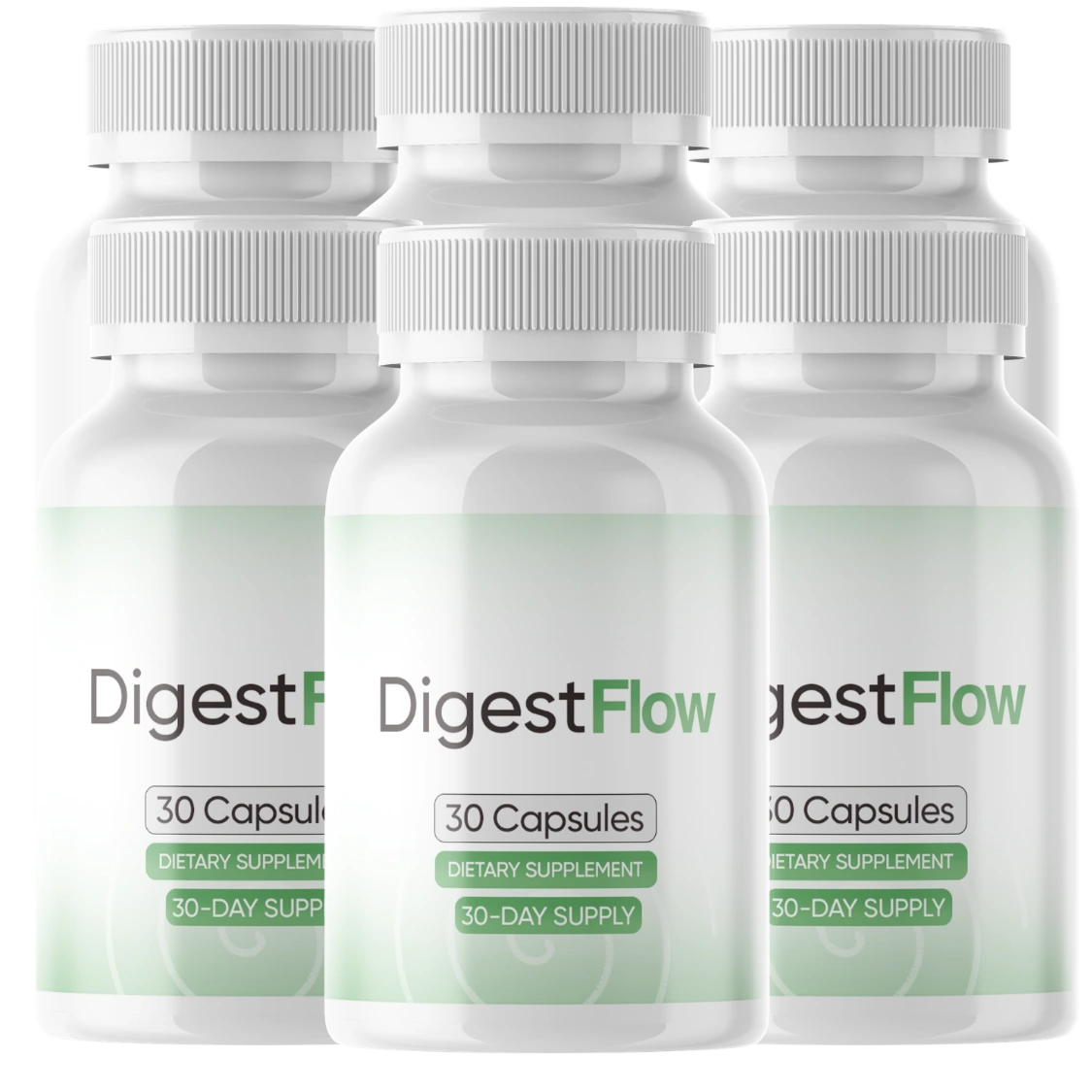
Order DigestFlow once you have read this page
One capsule a day with 138 mg of caffeine in it, and 60 days from the date of purchase to change your mind.
Two bottles $158 · six bottles $294 · 60 days from the date of purchase
Order DigestFlow On The Official WebsiteOne capsule a day · 30 per bottle · lot DIG-26/DI-5237