DigestFlow Official Website › Blog › Do Probiotic Supplements Survive Stomach Acid?
Do Probiotic Supplements Survive Stomach Acid? What a CFU Count Can Tell You
This site publishes no survival data for any probiotic, so it cannot say how many organisms get through stomach acid. It does say that results depend on the strain and that a CFU count is a quantity, not a finding. DigestFlow is not a probiotic: its label shows no strains and no CFU count.
- No survival figure for any probiotic is published on this site, so none is given here.
- A CFU count states how much is in the capsule. It does not state what the organisms did.
- Results for one strain do not carry over to another strain.
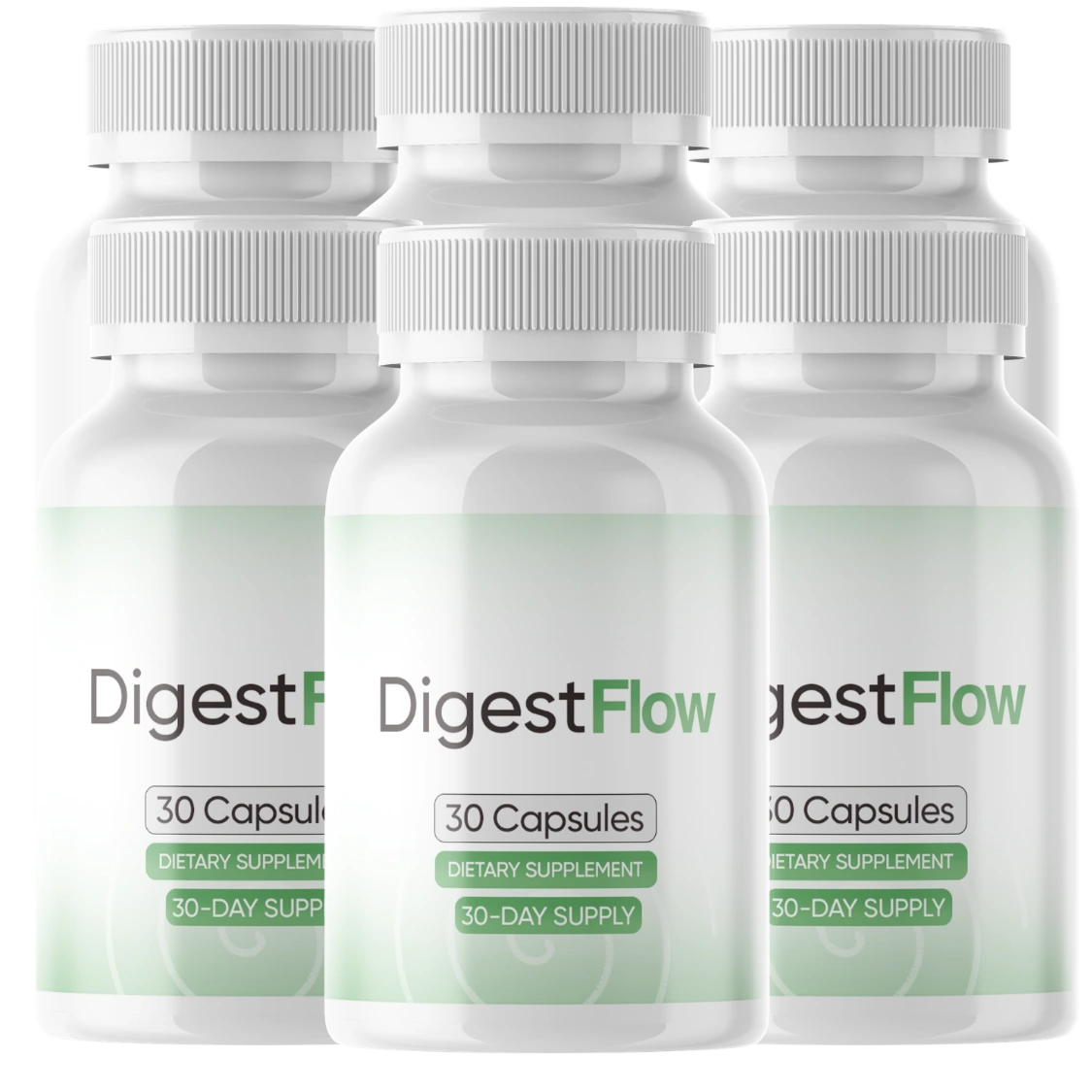
- DigestFlow has five plant-derived actives, no bacterial strains and no CFU count.
- The seller’s own category figure for a probiotic is two to eight weeks, when it works at all.

Do probiotic supplements survive stomach acid?
People ask this because it is the first obvious weak point. A live organism has to be swallowed, pass the stomach, and arrive somewhere useful. If most of them die on the way, the number on the bottle means little.
This site cannot settle that. It sells a capsule that is not a probiotic, and none of the studies it cites measure how many organisms survive the stomach. A page that quoted a survival rate would be inventing one.
What the site does state is the principle. Organisms have to survive the journey and then establish themselves, and results are specific to the strain. Both points are reasons to be careful with any broad claim that “probiotics work” or “probiotics do not work”.
What does a CFU count actually tell you?
CFU stands for colony-forming units. On a label it is a count of how many live organisms the maker says are in a dose. It is a quantity, in the same way that 130 mg is a quantity on a DigestFlow row.
A quantity is not a result. A large number says nothing about whether those organisms survive, settle, or change how anyone feels. That needs a trial of that strain, in people, measuring something that matters.
| What a probiotic label may print | What it tells you | What it does not tell you |
|---|---|---|
| A strain name | Which organism the maker says is inside | Whether that strain was ever tested for your question |
| A CFU count | How many organisms the maker says are in a dose | How many are alive when you swallow, or after the stomach |
| A claim about gut health | What the seller wants you to think | Whether the claim has support from trials of that strain |
| A best-before date | Until when the maker stands behind the count | What happened to the bottle on the way to you |
A reading aid for any probiotic label. It is not a review of a named product.
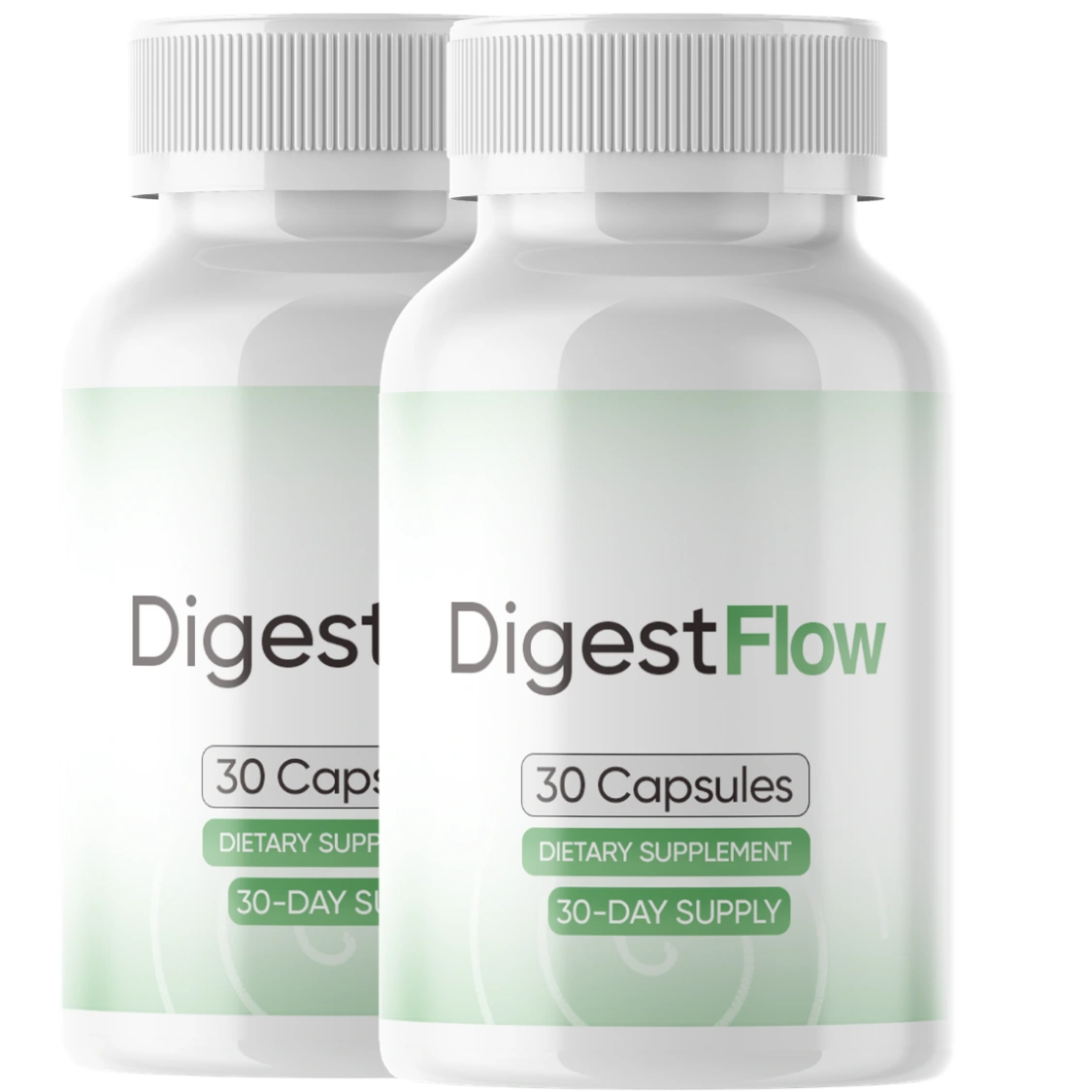
A capsule that is not a probiotic
DigestFlow has five printed actives and no strains. The order page shows today’s price and the 60-day guarantee, counted from the date of purchase.
See today’s price and guaranteeThis website is a retail desk, the U.S. stocking partner for DigestFlow, not the maker. BuyGoods processes the checkout.
How fast do probiotics work, if they work?
The seller’s own timeline page gives rough category figures. They are not measurements of named products. A probiotic is usually noticed after two to eight weeks, when it works at all. A bulk-forming fibre is usually noticed after two to five days. A stimulant laxative acts in six to twelve hours.
DigestFlow sits somewhere else. The caffeine row can be felt on day one, as alertness. The other four rows are not expected to act quickly. The distributor’s own reported common wait is three to six weeks.
The point of the comparison is to set the right expectation. Someone who moves from a fibre product to a probiotic, or to DigestFlow, will think it has failed in week one if they carry a two-to-five-day clock with them.
Are probiotic supplements worth it?
Only you and your doctor can decide that, and this site will not pretend to. It can set out what is published about cost and about the shape of the evidence.
| Approach | Typical monthly cost, as the seller’s pricing page gives it | What you know about the dose |
|---|---|---|
| DigestFlow capsule | $49 to $79 | All five amounts are printed, and four rows carry a standardisation percentage |
| A probiotic capsule | $20 to $60 | Strain names and a CFU count |
| A psyllium fibre | Under $15 | Grams, which you measure yourself |
Rough category figures, not named brands. Nothing here says one approach is better than another.
The honest advice on that page is the unprofitable kind: if you have never tried the cheap options, try them first. The National Center for Complementary and Integrative Health makes a related point about weighing a supplement’s marketing against its published evidence.
Is DigestFlow a probiotic?
No. The panel lists five actives and one other ingredient. There is no bacterial strain, no CFU count and no fibre. The capsule shell is hypromellose, a plant cellulose.
| Row on the label | Amount per capsule | Standardised to |
|---|---|---|
| Green coffee bean extract | 130 mg | 50% chlorogenic acids |
| Raspberry ketone | 130 mg | No percentage printed |
| Garcinia extract | 130 mg | 50% HCA |
| Caffeine anhydrous | 138 mg | Not standardised |
| Green tea extract | 130 mg | 98% polyphenols, 75% catechins, 45% EGCG, under 3% caffeine |
Read from the printed label. No Daily Value is established for any of the five rows.
Where DigestFlow is said to work at all, it works through what reaches the colon. Chlorogenic acids and green tea catechins are poorly absorbed, so a large share arrives in the colon, where gut bacteria act on it. That feeds and shifts bacteria already there. It does not add any.
Who should speak to a doctor before starting any gut supplement?
The DigestFlow label asks anyone taking a medication, or with a medical condition, to consult a physician first. It is not for anyone under 18, or anyone pregnant or nursing. The same habit is sensible with any gut product.
- Symptoms that are new or getting worse need a cause found, not a capsule.
- Bleeding, unexplained weight loss, fever or pain are reasons to be assessed.
- A liver condition, or a medicine with a liver warning, is worth raising before DigestFlow, because two of its rows have liver case reports at much higher intakes.
- Caffeine matters too. Each DigestFlow capsule carries 138 mg of it, and there is no caffeine-free version.
How can you test a probiotic or any gut supplement fairly?
Write one symptom down each evening for a week before the first dose. Use a word or a score out of five. A baseline collected afterwards is only a memory.
Change nothing else in the first month. A new diet, a new fibre and a new capsule in the same week leave you unable to say which one did anything.
Read your notes at four weeks. Decide at eight. For DigestFlow the 60-day guarantee is counted from the date of purchase, so keep the order email and set reminders before day sixty. Call +1 (877) 257-0710 with your order ID if you want a refund.
| Pack | Total | Per bottle | Per day at one a day | Supply |
|---|---|---|---|---|
| Two bottles | $158 | $79 | $2.63 | 60 days |
| Three bottles | $207 | $69 | $2.30 | 90 days |
| Six bottles | $294 | $49 | $1.63 | 180 days |
Pack prices as supplied to this site and read on 19 September 2026. The checkout shows today’s price. Each pack is a one-time payment, with no subscription.
Where do these facts come from?
The facts above come from the printed label, the distributor’s paperwork and these sources, which this site already cites:
Frequently asked questions
Do probiotics survive stomach acid?
This site does not publish survival data, so it cannot say. Survival and settling are the two things a probiotic has to manage, and results are specific to the strain.
What is a CFU count?
A count of how many live organisms the maker says are in a dose. It is a quantity, not a finding about what they do.
How long do probiotics take to work?
The seller’s rough category figure is two to eight weeks, when they work at all. That is not a measurement of any named product.
Is DigestFlow a probiotic?
No. It has five plant-derived actives, no bacterial strains and no CFU count.
Can I take DigestFlow with a probiotic?
Not published. Nothing on the label or in this site’s sources covers the combination. Change one thing at a time and ask a doctor or pharmacist.
Is DigestFlow FDA approved?
No. No dietary supplement is FDA approved. The statements about it have not been evaluated by the Food and Drug Administration.
Our view
The stomach-acid question is fair, and it cannot be answered from this site. We would rather say so than quote a number we cannot support.
A CFU count is worth reading, but only as a quantity. What matters next is whether the named strain was tested for the thing you care about. If it was not, the count is a number with no result behind it.
DigestFlow is a different kind of product. It does not add organisms. It carries a stimulant, which is the first thing to check against your own day. If that suits you and you want to try it, the order page shows the price and the 60-day terms.
Judge it on your own notes
If a caffeinated polyphenol capsule suits you, the order page shows the current price and the guarantee. Start your notes a week before the first capsule.
See today’s price and guaranteeThis website is a retail desk, the U.S. stocking partner for DigestFlow, not the maker. BuyGoods processes the checkout.
This page is general information, not medical advice. DigestFlow is a dietary supplement. It is not a drug, it is not FDA approved (no supplement is), and it is not intended to diagnose, treat, cure or prevent any disease. These statements have not been evaluated by the Food and Drug Administration. Ask your own doctor about your own situation.
Last updated .