DigestFlow Official Website › Blog › Garcinia Cambogia And The Liver
Garcinia Cambogia And The Liver: Reading The Case Reports Carefully
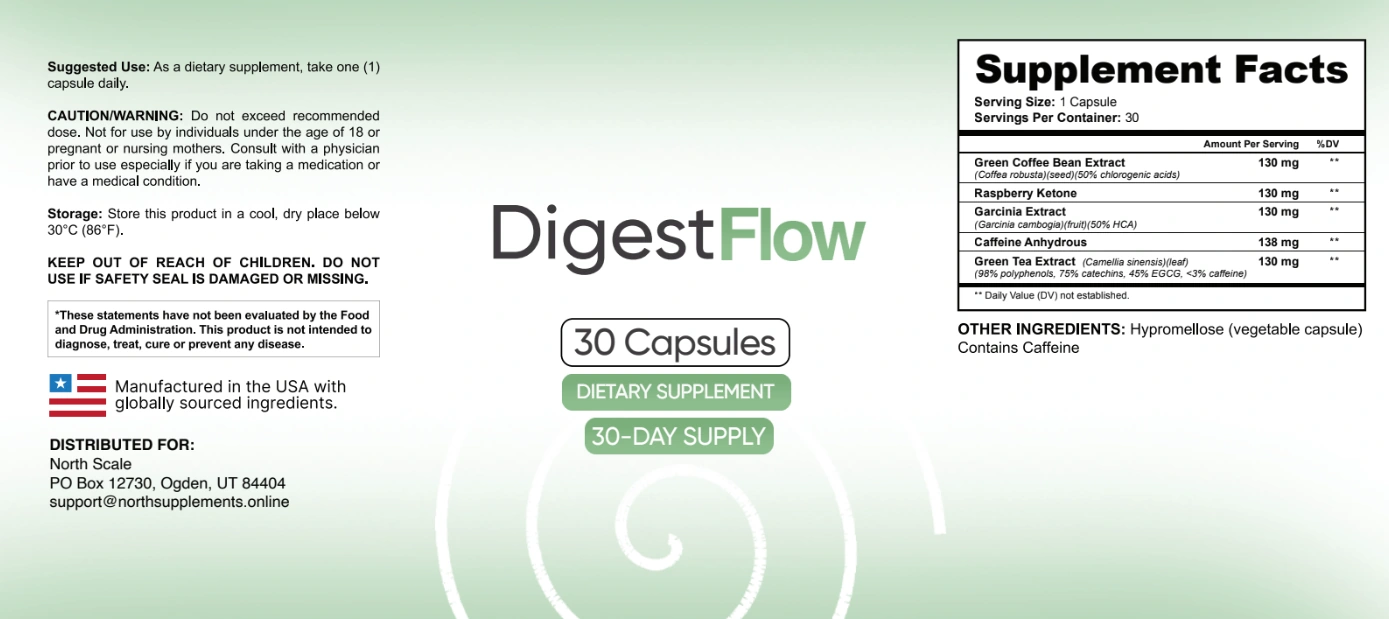
One row on the DigestFlow panel carries a genuine safety literature: more than two hundred reported adverse events, thirty-four published case reports, one death and nine liver transplants. This article sets that out in full, and then sets out why the amount on this label is a small fraction of what those reports involved.
- Garcinia cambogia is among the botanicals most frequently reported in supplement-related liver injury, and the literature is real rather than rumour.
- A 2025 review of the adverse-event databases found more than 200 reports and 34 published case reports, including one death and nine transplants.
- Almost all of that involves gram-scale daily intakes in multi-ingredient weight products.
- This label delivers about 65 mg of hydroxycitric acid, a small fraction of those amounts.
- Anyone with a liver condition or a history of liver injury should raise this product with a doctor before starting rather than after.
What garcinia is and why it is on labels
Garcinia gummi-gutta, still widely sold as Garcinia cambogia, is a small fruit from Southeast Asia and South India. Its dried rind has been used as a souring agent in cooking for a very long time, which is worth stating because the safety question is about concentrated extracts rather than about food.
The compound it is sold for is hydroxycitric acid, which inhibits ATP citrate lyase, an enzyme involved in fatty acid synthesis. That is a metabolic mechanism, not a digestive one, and it is the reason garcinia became a fixture of the weight-loss shelf about fifteen years ago.
On a digestive panel it is the odd one out. It has no gut mechanism this desk can describe and the mechanism page says so. What it does have is a safety literature, and a label that prints its amount makes that literature usable.
The case report file, in full
A 2025 review published in Pharmaceutical Biology searched multiple adverse-event databases along with PubMed and Google Scholar for clinical and preclinical reports of Garcinia toxicity. It was prompted by the United States Pharmacopeia’s decision to revise its Garcinia monographs to carry a cautionary statement about the risk of liver damage.
| What the 2025 review found | Figure |
|---|---|
| Adverse events of liver injury identified in the databases | More than 200 |
| Published case reports reviewed | 34 |
| Deaths among those case reports | 1 |
| Liver transplants among those case reports | 9 |
| Cases scored possible to highly probable on formal causality assessment | 17 |
| Cases where causality was confirmed by rechallenge | 1 |
| Pattern of injury | Hepatocellular, with raised ALT and AST |
| What USP did in response | Revised its Garcinia monographs to carry a cautionary statement about liver damage |
Figures from the 2025 review of the adverse-event databases. A case report is a report rather than a controlled observation, which is what the causality scoring exists to address.
Those figures deserve to be read without softening. One death and nine liver transplants across thirty-four published case reports is a serious signal, and the pattern of injury was hepatocellular with raised transaminases, which is the pattern seen in drug-induced liver injury generally.
LiverTox, the National Institute of Diabetes and Digestive and Kidney Diseases resource on drug-induced liver injury, carries its own entry describing weight-loss products containing Garcinia cambogia as linked to clinically apparent acute liver injury that can be severe and even fatal.
NCCIH puts the same position in plainer words for a general reader: it may be unsafe to consume garcinia cambogia products, including multi-ingredient products containing the extract, and numerous reports of liver toxicity have been made, although severe cases appear to be uncommon.
Why causality assessment matters here
A case report is a report. Somebody took a supplement, developed liver injury, and a clinician wrote it up. Establishing that the supplement caused the injury is a separate and harder job, and it is why the seventeen figure in the table above matters more than the two hundred.
Seventeen of the thirty-four published cases were scored on a formal causality instrument and came out as possible to highly probable. That is a structured assessment considering the timing, the pattern of enzyme elevation, the exclusion of other causes and what happened when the product was stopped.
One case went further and was confirmed by rechallenge: the person stopped, recovered, restarted, and the injury returned. Rechallenge is the strongest evidence a case report can produce, and it is rare because nobody sets out to do it deliberately.
The complicating factor runs through the whole literature. Most of these products are multi-ingredient, so attributing an injury to the garcinia specifically is difficult even when the causality score is high.
And this is not a rare exposure
An analysis of national survey data estimated how many US adults are taking the six botanicals most frequently reported in supplement hepatotoxicity, a list that includes Garcinia cambogia alongside turmeric, green tea extract, black cohosh, red yeast rice and ashwagandha. Overall supplement use in that cohort was 57.6 per cent.
A rare adverse event across a very large exposed population produces a meaningful absolute number of cases, which is the reason a signal like this gets taken seriously even when the individual risk is small.
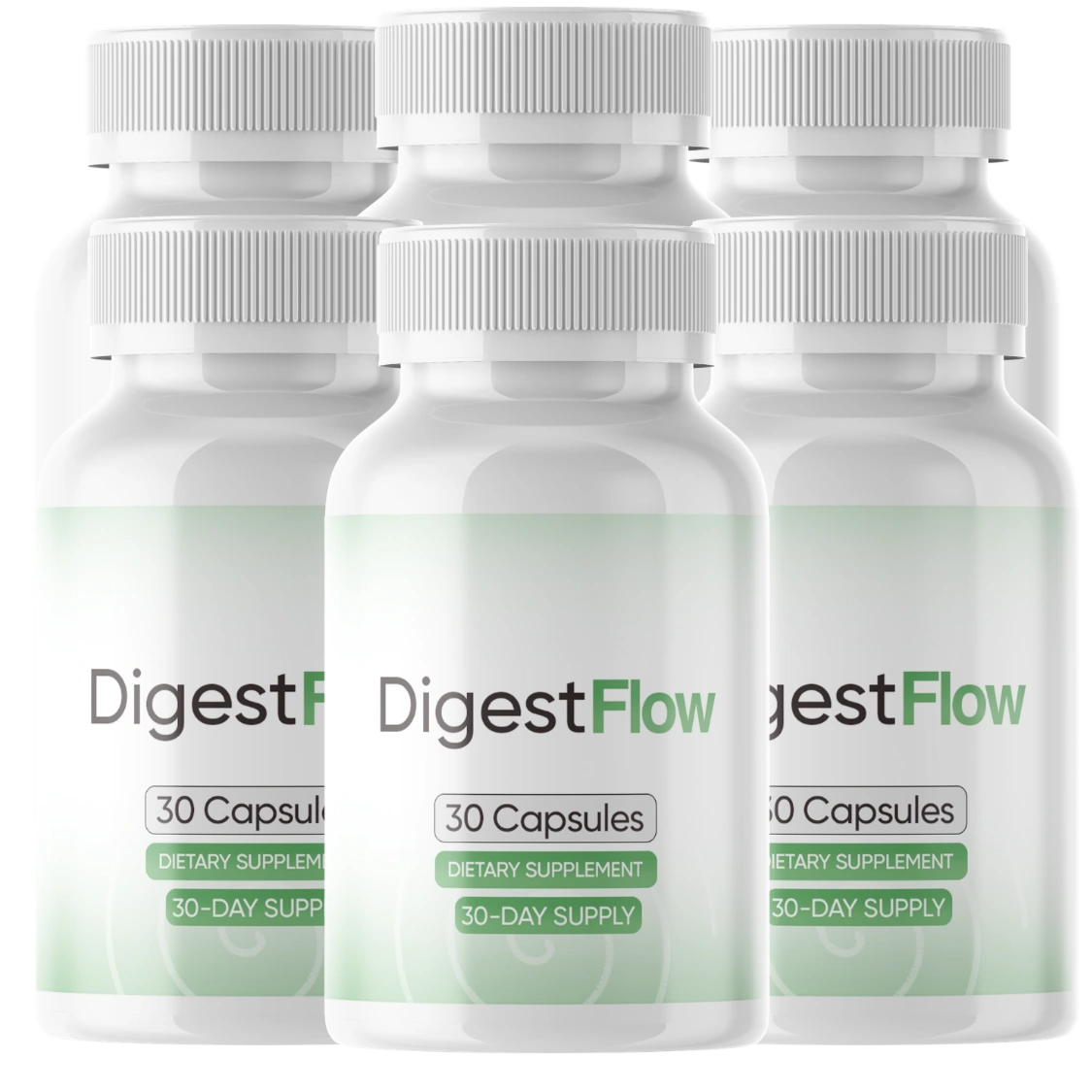
DigestFlow prints the garcinia amount on its panel
130 mg of extract standardised to 50 per cent hydroxycitric acid, which is what makes the comparison in this article possible at all.
Two bottles $158 · six bottles $294 · 60 days from the date of purchase
Order DigestFlow On The Official WebsiteOne capsule a day · 30 per bottle · lot DIG-26/DI-5237
How this label compares with the reports
Here is the part that keeps the file in proportion, and it is arithmetic rather than reassurance.
| The case report literature | This label | |
|---|---|---|
| Typical daily intake | Gram quantities of Garcinia extract | 130 mg of extract |
| Hydroxycitric acid delivered | Often over a gram a day | About 65 mg, at 50 per cent standardisation |
| Product type | Usually multi-ingredient weight products | A five-row panel, of which this is one |
| Why it was taken | Weight loss, usually at the label’s maximum dose | One capsule a day, sold for digestive wellness |
| What that changes | Attribution is difficult in a multi-ingredient product | The amount is a small fraction, and the product is still multi-ingredient |
The comparison that keeps the case reports in proportion without dismissing them. A small fraction of a dose associated with rare harm is reassuring; it is not the same as a demonstration of safety.
The case report literature overwhelmingly involves products taken for weight loss at their own maximum doses, which for garcinia products typically means well over a gram of hydroxycitric acid a day. This label delivers about 65 mg.
That is roughly a twentieth of the intakes involved, and it is a genuine difference rather than a rhetorical one. A dose-dependent hepatotoxicity signal at gram quantities does not transfer unchanged to a fraction of that amount.
What it does not do is make the row safe by demonstration. Nobody has run a safety study of 65 mg of hydroxycitric acid taken daily for months, because nobody runs safety studies of small amounts of ingredients with no efficacy evidence at that amount. The honest position is a large margin and an absence of positive evidence, which is not the same thing as a clean bill of health.
The other row with a liver file
Garcinia is not the only row on this panel with a liver literature, and a page that named one and not the other would be doing half a job.
The United States Pharmacopeia’s comprehensive review of green tea extract hepatotoxicity found published case reports at EGCG intakes from about 140 mg a day upward, with substantial variation between individuals that may have a genetic basis. It found no evidence that solvent residues, pesticides or contaminants were involved, and it produced a cautionary labelling requirement: take with food, not on an empty stomach.
This panel’s green tea row delivers about 58 mg of EGCG, which sits below the range where those reports begin. That is the reassuring half of the sentence, and it is the reason this desk describes green tea as the best-judged amount on the label while describing garcinia as the one with the file.
Both are covered at greater length on the side effects page, which is the page whose job that is.
Who should take this seriously
- Anyone with a diagnosed liver condition. This is the row to raise with a doctor before starting rather than after.
- Anyone with a history of drug-induced liver injury from any cause, because susceptibility appears to vary between individuals.
- Anyone already taking another supplement containing garcinia or a concentrated green tea extract, because the totals add up and nobody is adding them up for you.
- Anyone taking a prescription that already carries a liver caution.
- Anyone who develops abdominal pain, dark urine, unusual tiredness, loss of appetite or yellowing of the skin or eyes. Stop the capsule and speak to a doctor.
Abdominal pain, dark urine and jaundice are the ones the USP cautionary labelling language calls out, and they are the same ones the Garcinia literature describes. In that situation the right move is to stop and be seen, not to wait and see.
What this desk concludes
Three things, and they do not all point the same way.
The file is real and stating it is not optional. More than two hundred reports, thirty-four published cases, one death and nine transplants is not something a retail desk gets to leave off a page because it is inconvenient.
The margin on this label is large. About 65 mg of hydroxycitric acid against gram-scale intakes is roughly a twentieth, and dose matters in hepatotoxicity as it does elsewhere.
And the row has no business being on a digestive panel in the first place. Its mechanism is metabolic, its literature measures body weight, and the pooled trials found a mean difference of 0.88 kg that the authors themselves called of uncertain clinical relevance. One of those trials also reported gastrointestinal adverse events twice as often on hydroxycitric acid as on placebo, which is the wrong direction entirely for a product sold for digestive comfort.
The cleanest change a manufacturer could make to this panel is to remove this row and give the space to the three that have a gut literature. That is said on the benefits page too, and it remains the view here.
References
- van Breemen RB, Roe AL, Akhtar N. Hepatotoxicity of dietary supplements containing Garcinia gummi-gutta (L.) N. Robson. Pharm Biol. 2025;63(1):912-924. PMID 41262061. https://pubmed.ncbi.nlm.nih.gov/41262061/
- Garcinia Cambogia. In: LiverTox: Clinical and Research Information on Drug-Induced Liver Injury. National Institute of Diabetes and Digestive and Kidney Diseases, Bethesda. https://www.ncbi.nlm.nih.gov/books/NBK548087/
- Garcinia Cambogia: Usefulness and Safety. National Center for Complementary and Integrative Health, National Institutes of Health. https://www.nccih.nih.gov/health/garcinia-cambogia
- Likhitsup A, Chen VL, Fontana RJ. Estimated Exposure to 6 Potentially Hepatotoxic Botanicals in US Adults. JAMA Netw Open. 2024;7(8):e2425822. PMID 39102266. https://pubmed.ncbi.nlm.nih.gov/39102266/
- Onakpoya I, Hung SK, Perry R, Wider B, Ernst E. The Use of Garcinia Extract (Hydroxycitric Acid) as a Weight loss Supplement: A Systematic Review and Meta-Analysis of Randomised Clinical Trials. J Obes. 2011;2011:509038. PMID 21197150. https://pubmed.ncbi.nlm.nih.gov/21197150/
- Oketch-Rabah HA, Roe AL, Rider CV, et al. United States Pharmacopeia (USP) comprehensive review of the hepatotoxicity of green tea extracts. Toxicol Rep. 2020;7:386-402. PMID 32140423. https://pubmed.ncbi.nlm.nih.gov/32140423/